
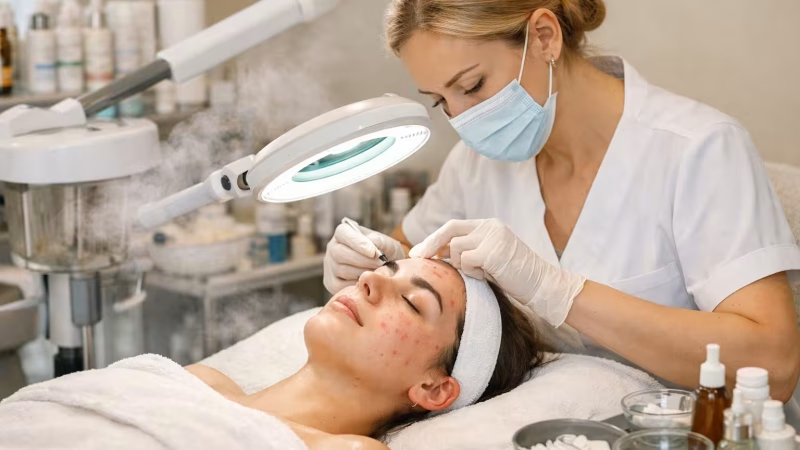
Acne remains one of the most common concerns addressed in professional skincare, yet it is also one of the most misunderstood. Despite significant advances in research, ingredient technology, and formulation science, misinformation continues to influence how many consumers—and even some professionals—approach acne management.
This Acne Awareness Month, we’re taking a closer look at the science behind acne, exploring the roles of inflammation, hormones, the microbiome, oxidative stress, barrier function, and ingredient selection. More importantly, we’re examining how today’s leading professionals are moving beyond outdated treatment philosophies and embracing a more comprehensive understanding of skin health.
Because successful acne management isn’t about chasing trends.
It’s about understanding the biology behind the breakout.
The Problem With Acne Advice
Consumers have never had greater access to skincare information. Unfortunately, they have also never had greater access to misinformation.
One week, social media promotes beef tallow as the answer to clear skin. The next, it’s lemon juice, DIY remedies, or a complicated routine packed with exfoliating acids, retinoids, and harsh treatments that leave the skin barrier compromised.
By the time many clients seek professional guidance, they’re often dealing with more than acne alone. They’re managing inflammation, sensitivity, barrier dysfunction, and the frustration that comes from trying countless solutions that failed to deliver lasting results.
The most effective acne protocols are rarely the most viral.
They’re usually the most consistent.
Acne Starts Before You Can See It
One of the most important developments in acne research is the recognition that inflammation often begins long before a visible blemish appears.
Before a client notices a papule, pustule, or breakout, changes may already be occurring within the follicle. Increased keratinocyte activity, altered sebum composition, oxidative stress, microbial imbalance, and inflammatory signaling can all contribute to the development of acne lesions.
The breakout itself is often the final visible sign of a process that has been unfolding beneath the surface.
Which means successful acne management isn’t about reacting to blemishes after they appear.
It’s about understanding—and addressing—the environment that allowed them to develop.
The Biggest Acne Myth Professionals Still Believe
For decades, acne treatment was built around a simple assumption: if the skin is peeling, drying, or irritated, the treatment must be working.
Modern acne science tells a different story.
While corrective treatments remain important, many of today’s most successful acne outcomes are achieved not by increasing intensity, but by improving tolerance and supporting overall skin function.
The goal isn’t to overwhelm the skin.
The goal is to create an environment where the skin can function optimally.
This shift has transformed how many professionals approach acne management, placing greater emphasis on inflammation control, barrier support, and long-term compliance rather than relying solely on aggressive corrective measures.
Sometimes the most advanced protocol isn’t the strongest.
It’s the smartest.
The Hormone Conversation
Hormones are often oversimplified in acne discussions.
Many people assume the relationship begins and ends with increased oil production.
While hormones certainly influence sebaceous gland activity, their impact extends much further. Hormonal fluctuations can affect inflammatory pathways, keratinization, wound healing, and barrier function, all of which contribute to acne development and treatment outcomes.
This helps explain why two clients with seemingly identical acne presentations may respond very differently to the same treatment plan.
The skin may look similar.
The biology may not.
Recognizing when acne appears to have a hormonal component allows professionals to set realistic expectations, tailor treatment strategies, and determine when collaborative care with other healthcare providers may be beneficial.
Before-and-Afters Don’t Tell the Whole Story
The skincare industry loves transformation photos—and for good reason.
A compelling before-and-after image can demonstrate what’s possible when science, consistency, and professional guidance come together.
But experienced acne professionals know that the image rarely tells the entire story.
Behind every successful transformation may be months of education, homecare compliance, treatment adjustments, barrier repair, lifestyle modifications, and ongoing support.
The photograph captures the outcome.
The expertise lives within the process.
This distinction is especially important in an era where social media rewards dramatic visual results while often overlooking the critical thinking and individualized care required to achieve them safely.
Ingredients Every Acne Professional Should Understand
The most effective acne formulations rarely rely on a single hero ingredient. Instead, they address multiple biological pathways involved in acne development.
When evaluating a formulation, ask yourself:
What process is this ingredient influencing?
It’s equally important to remember that formulation design, concentration, stability, and delivery systems often determine whether an ingredient performs as intended.
For Follicular Congestion and Cellular Turnover
- Salicylic Acid
- Retinoids
- Retinaldehyde
- Mandelic Acid
- Lipo-Hydroxy Acid (LHA)
These ingredients help regulate keratinization, reduce congestion, and support healthy cellular turnover within the follicle.
For Sebum Regulation
- Niacinamide
- Zinc PCA
- Green Tea Polyphenols (EGCG)
- L-Carnitine
These ingredients help support balanced sebaceous activity while reducing some of the inflammatory consequences associated with excess oil production.
For Inflammation
- Azelaic Acid
- Centella Asiatica
- Bisabolol
- Allantoin
Because inflammation is now recognized as a key driver in acne development, these ingredients play an important role in supporting healthier skin function and improving treatment tolerance.
For Microbiome Support
- Prebiotics
- Postbiotics
- Lactobacillus Ferments
- Lactoferrin
Modern acne research increasingly focuses on microbial balance rather than complete bacterial elimination. The goal is no longer sterility.
The goal is balance.
For Oxidative Stress
- Vitamin C
- Resveratrol
- Superoxide Dismutase (SOD)
- Coenzyme Q10
Oxidative stress is often overlooked in acne discussions despite growing evidence that lipid oxidation may contribute to inflammatory cascades within the follicle.
Barrier Health Is Acne Health
One of the most common mistakes in acne management is assuming that every breakout requires a stronger corrective approach.
Sometimes the opposite is true.
An impaired skin barrier can contribute to increased inflammation, delayed healing, sensitivity, dehydration, and reduced tolerance to treatment.
As Skin Games Acne Judge, acne specialist, and Mixi Skincare founder Maddie Tooze—known throughout the industry as “Acne Maddie”—frequently emphasizes in her work with acne clients:
“I’m very focused on healing your skin and keeping your skin barrier healthy even when you’re healing your acne.”
— Maddie Tooze (“Acne Maddie”), Skin Games Acne Judge, Founder of Mixi Skincare, and Acne Specialist
That philosophy reflects one of the most important shifts occurring within acne management today. While corrective ingredients remain valuable tools, long-term success often depends on reducing inflammation, supporting barrier function, and improving skin resilience rather than continuously escalating treatment intensity.
More isn’t always better.
Smarter is better.
Barrier-supportive ingredients such as ceramides, cholesterol, linoleic acid, and panthenol deserve a place in many acne protocols.
Red Flags Professionals Should Watch For
Not every acne brand deserves a place in your treatment room.
Be cautious of companies that:
- Promise permanent acne cures
- Rely on fear-based marketing
- Encourage excessive exfoliation
- Ignore barrier health
- Focus solely on bacterial elimination
- Promote one-size-fits-all protocols
- Prioritize trends over evidence
Acne is complex.
Any brand claiming otherwise deserves a second look.
Why This Matters to The Skin Games Community
At The Skin Games, we celebrate results.
But results are never the whole story.
Behind every acne transformation is a professional who chose education over assumptions, science over trends, and critical thinking over shortcuts.
The best acne professionals aren’t defined by the products they carry or the devices they own. They’re defined by their commitment to continuous learning, their willingness to challenge outdated beliefs, and their ability to understand not only what works—but why it works.
Acne Awareness Month isn’t simply about recognizing a common skin condition.
It’s about recognizing the responsibility we have as professionals to continue raising the standard of care.
Because while acne may be one of the most common concerns we treat, helping clients navigate it successfully remains one of the most meaningful things we do.
And that’s exactly the kind of excellence The Skin Games was built to celebrate.