

Longevity has become the buzzword of the moment. It’s on magazine covers, in boardroom conversations, and all over wellness social media. But here’s the thing longevity isn’t new. The pursuit of a longer, healthier life has surrounded us since the beginning of time. Healers, herbalists, ancient physicians: they were all, in essence, longevity practitioners. We’ve simply found a new language for a very old purpose.
So what does longevity actually mean? For many, the instinct is to say “living longer.” But that’s not the whole picture. True longevity isn’t just about adding years to a life it’s about adding *life* to those years. Living longer, healthier, and happier. That is the real goal.
We Are Already Living Longer, But Why?
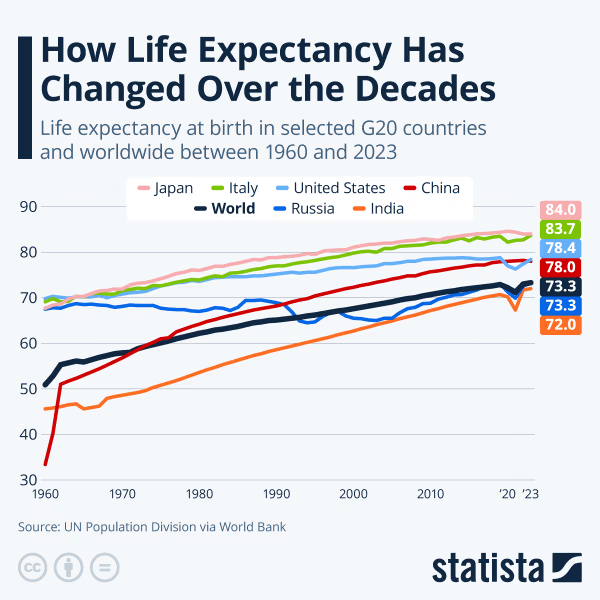
The data tells a remarkable story (Pic1). Compare life expectancy figures from the 1920s to the 1960s to the 2000s, and a clear trend emerges: someone born in 2020 can expect to live at least a decade longer than someone born in the 1960s. That’s not a small shift that’s a generational transformation in human survival.
What drove it? Several things working together.
Health and safety culture played a significant role. Workplaces became protected environments. The introduction of formal health and safety legislation meant fewer accidents, fewer occupational fatalities, and a workforce that came home alive. Something as simple as not being permitted to stand on a stool to change a lightbulb at work is, in aggregate, a life-saving measure.
The discovery of antibiotics was perhaps the single most impactful medical breakthrough of the 20th century. Infections that had previously killed pneumonia, sepsis, tuberculosis, became treatable. Entire populations were no longer at the mercy of the microbial world in the same way.
**Hygiene practices** shifted culture profoundly. Handwashing, sanitation, clean water access, regular bathing these habits, now so embedded in daily life that we take them for granted, eliminated vast quantities of preventable disease. Pathogens, bacteria, viruses: we learned how to keep them at bay.
The Modern Problem: Longer Lives, But Are They Healthier Ones?
Here’s where the picture becomes more complex. As our lives have extended, they have also, in many ways, become more sedentary. We work longer hours than any previous generation. We are busier than ever. And in that busyness, we have moved away from the habits that once kept us well.
We don’t cook from scratch the way our grandmothers did from whole, fresh, nutrient-dense ingredients that nourished the body at a cellular level. We move less. Research consistently suggests that the body needs regular, sustained movement ideally across much of the day to maintain a healthy weight, support organ function, and avoid the slow accumulation of metabolic damage.
The consequence? Inflammation. Chronic, low-grade, systemic inflammation has become one of the defining health challenges of the modern era. And inflammation, it turns out, is not just relevant to disease it is central to how we age. It is the silent enemy of longevity.
The Longevity Genes: Meet Klotho and SIRT
At the heart of the science of longevity are two extraordinary genes: **Klotho** and **SIRT** (Sirtuin). These are not peripheral players they are master regulators of how our cells age, repair themselves, and survive.
Klotho: The Anti-Ageing Gene
Named after the Greek Fate who spins the thread of life, Klotho was identified in 1997 when Japanese researchers discovered that mice with a defective version of this gene developed a syndrome that looked strikingly like accelerated human aging shortened lifespan, skin atrophy, bone loss, cardiovascular calcification, and muscle wasting. The opposite was equally striking: when the Klotho gene was overexpressed, those mice lived significantly longer up to 31% beyond their normal lifespan and maintained healthier organ function throughout.
Klotho is classified as the first documented aging-suppressor gene in mammals. It functions as a guardian at the cellular level, protecting against oxidative stress, supporting DNA repair, and maintaining the youthful behaviour of cells. When the Klotho gene is active and expressed well, it converts into the Klotho protein. That protein then supports the synthesis of FGF23 (fibroblast growth factor 23) a pathway through which our organs retain the ability to repair and regenerate themselves.
For skin specifically, Klotho is proving to be a major player. It regulates oxidative stress, reduces trans epidermal water loss, supports collagen production, and has been shown in clinical studies to reduce DNA damage after UV radiation exposure by up to 40%. It is, in essence, cellular longevity made visible on the surface of the body.
But here are the critical point: Klotho levels naturally decline with age. And they decline faster when the body is under chronic inflammatory load. When inflammation is persistently elevated through poor diet, inactivity, stress, or environmental exposure the Klotho gene cannot function as effectively as it should. The guardian becomes compromised, and the signs of aging accelerate.
SIRT: The Longevity Enzymes
The Sirtuin family seven proteins known as SIRT1 through SIRT7 — are often called the guardians of the genome. They are NAD⁺-dependent enzymes, meaning they require nicotinamide adenine dinucleotide (NAD⁺) as fuel to carry out their work. And that work is remarkable in its scope.
SIRT operate within the cell nucleus, where it regulates DNA repair and gene silencing. SIRT work within the mitochondria, managing energy production and antioxidant defence. Together, the sirtuins address virtually every hallmark of cellular aging: genomic instability, telomere shortening, epigenetic drift, mitochondrial dysfunction, and the accumulation of senescent cells.
SIRT1 is the most extensively researched of the family, it controls inflammation. When SIRT1 is active, it suppresses this pathway and helps keep chronic inflammation in check. When SIRT1 activity falls as it does when NAD⁺ levels decline with age the inflammatory environment worsens, and the aging process accelerates.
For the skin, peer-reviewed research confirms that SIRT1 regulates genes involved in oxidative stress response and apoptosis (programmed cell death), making it directly relevant to how skin ages from both within and through external damage such as UV radiation.
The Klotho-SIRT Axis: A Partnership That Defines How We Age
What makes the emerging science so compelling is how deeply these two pathways are connected. Klotho and SIRT1 don’t simply work in parallel they are part of the same protective network.
Research published in Journal from the Nature Portfolio NPJ Aging (2025) demonstrated that Klotho regulates cellular proliferation and stem cell function through the Sirt1 signalling pathway specifically via a mechanism that governs the DNA-damage response. Klotho deficiency was shown to reduce regenerative capacity and impair cellular proliferation across multiple organ types. When Klotho levels were restored, Sirt1 activity was restored with them, and cellular repair capacity improved.
A 2024 study in Cells further established that Klotho’s anti-inflammatory effects are, in part, mediated through SIRT1. When Klotho acts on the body to inhibit inflammatory signalling, SIRT1 expression rises amplifying the antioxidant response and protecting cells from damage. The two genes appear to reinforce one another: when both are well-expressed and well-supported, cells repair effectively, inflammation is controlled, and aging is slowed. When either is compromised particularly through chronic inflammation the other suffers too.
This is why inflammation is not merely a symptom of aging. It is, increasingly, understood as a cause.
Stress: The Silent Accelerator of Aging
There is one more critical factor that sits at the crossroads of inflammation, Klotho, and SIRT and it is one that modern life manufactures in abundance: chronic stress.
When we experience stress, the body releases cortisol our primary stress hormone. In short bursts, cortisol is protective. It sharpens focus, mobilises energy, and helps us respond to threat. But when cortisol is persistently elevated through overwork, poor sleep, unresolved anxiety, and the relentless pace of modern life it becomes deeply destructive. Elevated cortisol promotes systemic inflammation, suppresses immune function, accelerates cellular aging, and directly undermines the biological systems we now know matter most for longevity.
The answer is not to just eliminate stress that is neither possible nor desirable. The answer is to build genuine resilience: to support the body’s ability to recover from stress, rather than remain trapped in it.
Ashwagandha: Ancient Adaptogen, Modern Evidence
One of the most compelling natural tools for stress resilience is one that has been used in Ayurvedic medicine for thousands of years: ashwagandha (*Withania somnifera*). This root herb is classified as an adaptogen a substance that helps the body adapt to and recover from stress without causing harm.
The science is now catching up with the tradition. A 2025 systematic review and meta-analysis, drawing on 15 randomised controlled trials and nearly 900 participants, confirmed ashwagandha’s anti-inflammatory, neuroprotective, adaptogenic, and immunomodulatory activities. Clinical trials have demonstrated significant reductions in circulating cortisol levels across doses and supplementation periods, alongside measurable improvements in stress perception, anxiety, and sleep quality.
This matters for longevity because cortisol and Klotho are in direct opposition. Chronic stress and elevated cortisol create exactly the inflammatory environment in which Klotho expression is suppressed and SIRT1 activity is diminished. Supporting the body’s stress response helping it come down from activation rather than stay in it is therefore not a lifestyle choice. It is a longevity strategy.
Natural Approaches to Stress Resilience
Beyond supplementation, the most effective stress interventions tend to be the oldest ones:
Movement not punishment, not extreme exercise, but regular, gentle, sustained movement is one of the most potent anti-inflammatory and cortisol-regulating tools we have. Walking in nature, in particular, has been shown to lower cortisol and inflammatory markers in ways that exercise alone in-built environments does not fully replicate.
Breathwork and mindfulness practices Even ten minutes of conscious, slow breathing shifts the nervous system from sympathetic (stress) to parasympathetic (rest and repair) dominance the state in which cellular repair, collagen synthesis, and immune regulation all function optimally.
Social connection real, in-person, emotionally resonant connection is one of the most robust predictors of longevity in the research literature, outperforming many pharmaceutical interventions. Isolation, conversely, raises cortisol and accelerates biological aging.
Nutrition plays a foundational role. A diet rich in whole, unprocessed foods abundant in polyphenols, omega-3 fatty acids, and fibre, directly reduces the inflammatory burden that undermines Klotho and SIRT function. Our ancestors ate this way not because they were health-conscious, but because it was simply food. We have complicated it, and our longevity is suffering for it.
What This Means for Aesthetics and Longevity Care
The implications for our industry are significant, and exciting.
Longevity skincare is no longer a marketing concept. It is a scientific framework. When we approach the skin through a longevity lens, we are asking not just how to manage the visible signs of aging, but how to support the biological systems that govern cellular repair, regeneration, and resilience.
Protocols that reduce oxidative stress, support NAD⁺ levels, reduce systemic inflammation, and stimulate growth factor activity are, in effect, working on the Klotho-SIRT axis. Microneedling & microchanneling for example through its mechanism of controlled wound healing and growth factor release speaks directly to this biology. Advanced treatments incorporating technologies such as cold plasma, which reduces oxidative and inflammatory burden in the skin, are working at the same level.
But longevity skincare is also about what happens away from the treatment bed. The conversation about diet, movement, sleep, and stress is no longer separate from the conversation about skin. They are the same conversation. Our skin is the mirror of our biology, and our biology is shaped by how we live.
The Light We Were Born to Live By
There is one final piece of this puzzle and it may be the most overlooked longevity factor of all: light.
Our ancestors lived by natural light. They rose with the sun a warm, amber-toned dawn light, rich in red and orange wavelengths, gently signalling the body to wake, to raise cortisol in its natural morning rhythm, to begin the day. As evening approached, the light shifted again to the warm gold of firelight and candle flame, wavelengths that told the brain: the day is ending. Begin the repair cycle. Release melatonin. Rest.
This is what the human body evolved over hundreds of thousands of years to expect. And in a single generation, we have dismantled it entirely.
We now spend our evenings bathed in artificial blue light from screens, LED bulbs, overhead lighting, light that the brain interprets as midday sunlight. When blue light enters the eye at night, it signals the hypothalamus and pineal gland to suppress melatonin production, delay sleep onset, and keep cortisol elevated. The body stays in a state of artificial daytime, long after it should have begun the night’s work of cellular repair.
The consequences cascade. Elevated nighttime cortisol disrupts sleep, impairs skin healing, and contributes to accelerated aging. Melatonin which is not only a sleep hormone but a powerful cellular antioxidant is depleted at precisely the moment the body needs it most.
Our ancestors didn’t have a bedtime routine. They had something far more powerful: the sky. They went to sleep when the light told them to. They woke when it told them to. Their circadian rhythm the body’s internal 24-hour clock, governing everything from cortisol to melatonin to immune activity to cellular repair was perfectly synchronised with the natural world.
We can choose to return to some version of that. Morning sunlight exposure within the first hour of waking. Warm, low-intensity lighting in the evening. Screens dimmed and distanced after sunset. A bedroom that is cool, dark, and quiet. These are not wellness trends. They are biological imperatives, supported by decades of research in chronobiology.
Conclusion: The Science Was Always There
Longevity is not a new idea dressed in new clothes. It is humanity’s oldest pursuit, now illuminated by science extraordinary enough to explain exactly what was happening when our grandmothers grew their own vegetables, walked everywhere, took herbs from the garden, and slept soundly from dark to dawn.
The Klotho and SIRT genes remind us that the body is designed to repair itself. It has always had this capacity. But it needs the right conditions: low inflammation, managed stress, nourishing food, genuine movement, and light that honours the rhythm we were built to live by.
Our job, as practitioners at the intersection of science and skin, is to protect those conditions and to use every evidence-based tool we have to support them.
Longevity isn’t about living forever. It’s about living fully, for as long as possible, in a body that has been honoured, supported, and deeply cared for. That is our work. And it has never been more relevant.